Securing your financial future requires a proactive approach, and that starts with setting clear, achievable financial goals. This guide provides a structured path to crafting a comprehensive financial plan, covering everything from defining your aspirations to managing investments and seeking professional guidance. We’ll explore strategies for managing debt, building savings, and investing wisely to help you build a secure and prosperous future.
Through practical examples, actionable steps, and insightful comparisons, you’ll learn how to align your financial goals with your overall life objectives and values. We’ll delve into different planning approaches, investment options, and the crucial role of regular review and adjustment to ensure your plan remains relevant and effective throughout your life’s journey.
Defining Financial Goals
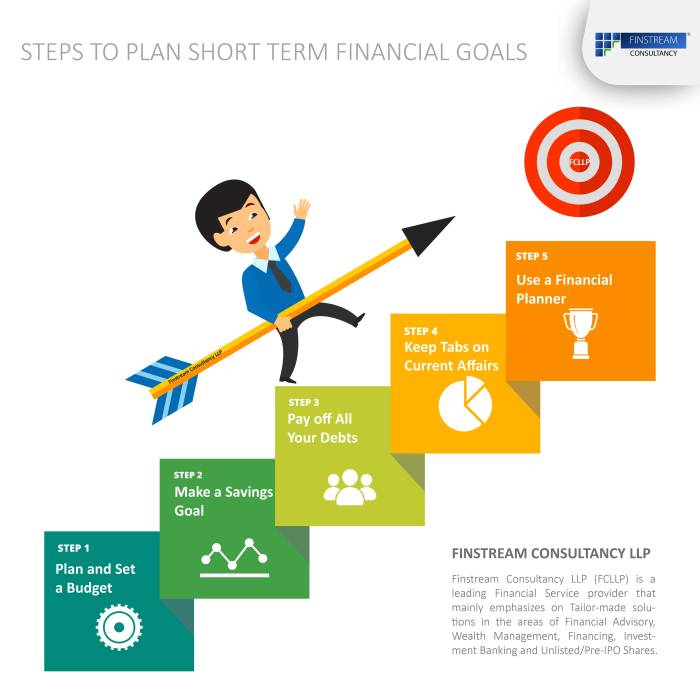
Setting clear and achievable financial goals is crucial for building a secure financial future. Without defined objectives, your efforts may be scattered and unproductive. A well-defined plan allows you to track progress, make informed decisions, and ultimately achieve your financial aspirations. This section will guide you through the process of defining your financial goals effectively.
The SMART Method for Goal Setting
The SMART method provides a framework for creating effective goals. This acronym stands for Specific, Measurable, Achievable, Relevant, and Time-bound. Applying this method ensures your goals are well-defined and provide a clear path to success.
- Specific: Your goal should be clearly stated and leave no room for ambiguity. Instead of “save more money,” a specific goal would be “save $10,000 for a down payment on a house.”
- Measurable: You need a way to track your progress. For example, “reduce credit card debt by $500 per month” is measurable, while “pay down some debt” is not.
- Achievable: The goal should be challenging but realistic given your current financial situation and resources. Setting an overly ambitious goal can lead to discouragement.
- Relevant: The goal should align with your overall life goals and values. For instance, saving for a child’s education is relevant if you plan to have children.
- Time-bound: Set a deadline for achieving your goal. This creates a sense of urgency and helps you stay focused. For example, “pay off my student loans within three years.”
Examples of SMART Goals for Different Life Stages:
- Early Career: “Save $5,000 in an emergency fund within 12 months by setting aside $417 per month.”
- Family: “Save $20,000 for a down payment on a larger house within 3 years by contributing $556 per month to a savings account.”
- Retirement: “Increase retirement savings contributions by 5% annually for the next 10 years to reach a $1 million retirement nest egg by age 65.”
Aligning Financial Goals with Life Goals and Values
Your financial goals should reflect your overall life aspirations and personal values. If you value travel, a significant portion of your financial planning might be dedicated to saving for trips. Conversely, if family is your priority, you may prioritize saving for your children’s education or a comfortable home.
For example, someone who values financial independence might prioritize paying off debt quickly and investing aggressively. In contrast, someone who values experiences might allocate more funds towards travel and leisure activities. These choices directly reflect individual priorities and values. Understanding your values is key to making sound financial decisions that contribute to a fulfilling life.
Short-Term, Mid-Term, and Long-Term Financial Goals
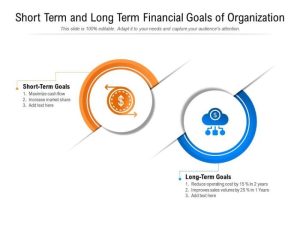
It’s helpful to categorize your financial goals by their time horizon. This helps in prioritizing and strategizing effectively.
| Goal Type | Time Horizon | Example |
|---|---|---|
| Short-Term | Less than 1 year | Build an emergency fund of $1,000 |
| Mid-Term | 1-5 years | Pay off credit card debt |
| Long-Term | 5+ years | Save for retirement |
Creating a Financial Plan
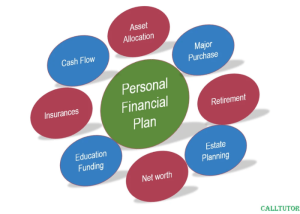
Developing a comprehensive financial plan is crucial for achieving your financial goals. A well-structured plan provides a roadmap, guiding your financial decisions and helping you stay on track toward financial security and success. This process involves several key steps, each contributing to a holistic and effective plan.
Steps in Developing a Financial Plan
Creating a financial plan requires a systematic approach. Each step builds upon the previous one, forming a cohesive strategy for managing your finances. Neglecting any step can weaken the overall effectiveness of your plan.
- Determine your net worth: Calculate your assets (what you own, like savings, investments, and property) minus your liabilities (what you owe, such as loans and credit card debt). This provides a snapshot of your current financial position.
- Set realistic short-term and long-term goals: Define specific, measurable, achievable, relevant, and time-bound (SMART) goals. Examples include saving for a down payment on a house within five years or retiring comfortably at age 65.
- Develop a budget: Track your income and expenses to understand your spending habits and identify areas for improvement. A well-structured budget helps allocate funds towards your goals while managing debt effectively.
- Manage debt strategically: Prioritize paying down high-interest debt, such as credit card debt, to minimize interest payments and free up more money for savings and investments.
- Plan for retirement: Determine how much you need to save for retirement and develop a strategy to reach your retirement savings goals. This may involve contributing to retirement accounts, such as 401(k)s or IRAs.
- Plan for unexpected expenses: Establish an emergency fund to cover unexpected costs, such as medical bills or car repairs. Aim for 3-6 months’ worth of living expenses in your emergency fund.
- Regularly review and adjust your plan: Your financial situation and goals will change over time. Regularly review your plan (at least annually) and make adjustments as needed to ensure it remains relevant and effective.
The Role of Budgeting in Achieving Financial Goals
Budgeting is the cornerstone of any successful financial plan. It provides a framework for managing your finances, ensuring that your income is allocated effectively to meet your needs and achieve your goals. Without a budget, it’s difficult to track progress, identify areas for improvement, and stay on track towards your financial objectives.
- A budget helps you visualize your income and expenses, revealing spending patterns and areas where you can cut back.
- It allows for strategic allocation of funds towards specific goals, such as saving for a down payment or paying off debt.
- A budget provides a sense of control over your finances, reducing stress and promoting financial stability.
Sample Budget Template
A simple budget template can be created to track income and expenses. Categorizing expenses helps to identify areas for potential savings.
- Income Sources:
- Salary/Wages
- Investments (Dividends, Interest)
- Other Income (Side Hustle, Rental Income)
- Expense Categories:
- Housing (Rent/Mortgage, Utilities)
- Transportation (Car Payment, Gas, Public Transportation)
- Food (Groceries, Dining Out)
- Debt Payments (Loans, Credit Cards)
- Healthcare (Insurance, Medical Expenses)
- Savings (Emergency Fund, Retirement, Investments)
- Personal Spending (Entertainment, Clothing)
Flowchart for Creating and Reviewing a Financial Plan
The process of creating and reviewing a financial plan is iterative. A flowchart visually represents this continuous cycle. Imagine a flowchart with the following steps:
1. Start
Begin by assessing your current financial situation (net worth).
2. Define Goals
Set short-term and long-term financial goals.
3. Create Budget
Develop a detailed budget outlining income and expenses.
4. Manage Debt
Develop a strategy to manage and reduce debt.
5. Plan for Retirement
Determine retirement savings needs and develop a plan.
6. Establish Emergency Fund
Create and maintain an emergency fund.
7. Review and Adjust
Regularly review your plan and make adjustments as needed. This step loops back to step 2 (Define Goals) to ensure the plan remains aligned with evolving needs and circumstances. Decision points would exist at each step, allowing for adjustments based on the assessment of progress and changes in circumstances. For example, if debt reduction is proving challenging, a decision might be made to cut back on discretionary spending.
If investment returns are lower than expected, adjustments might be made to the investment strategy or savings rate.
Building a robust financial plan is a journey, not a destination. By clearly defining your goals, creating a detailed budget, strategically managing debt and savings, and making informed investment decisions, you can take control of your financial well-being. Remember to regularly review and adapt your plan to accommodate life’s changes. With careful planning and consistent effort, you can achieve financial security and work towards a future aligned with your dreams and aspirations.
Question & Answer Hub
What if my financial goals change over time?
Regularly review and adjust your plan. Life events necessitate changes, and your plan should reflect your evolving needs and priorities.
How often should I review my financial plan?
At least annually, or more frequently if significant life events occur (marriage, job change, etc.).
What’s the difference between a financial advisor and a financial planner?
While the terms are often used interchangeably, financial planners typically offer broader advice encompassing various aspects of financial life, while financial advisors may focus more narrowly on investment management.
Are there free resources available to help me create a financial plan?
Yes, many online tools, budgeting apps, and government websites offer free resources and templates to assist in financial planning.