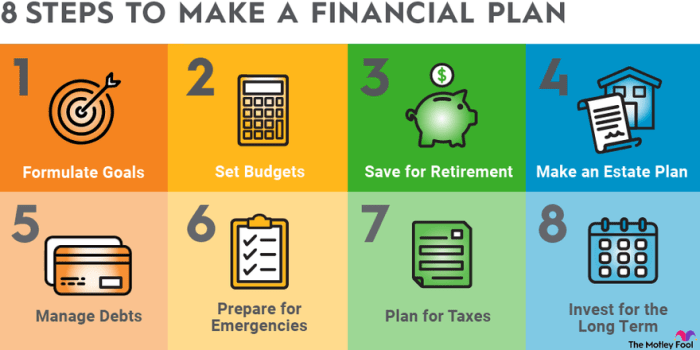
Securing your financial future is a journey, not a destination, and understanding how to plan for financial independence is the crucial first step. This guide provides a comprehensive roadmap, navigating the complexities of budgeting, investing, and debt management to help you achieve lasting financial security and the freedom to live life on your terms. We’ll explore practical strategies and actionable steps, empowering you to take control of your finances and build a brighter tomorrow.
From defining your personal vision of financial independence to creating a robust investment strategy and managing debt effectively, we’ll cover essential aspects of financial planning. We’ll also delve into the importance of regular review and adaptation of your plan, acknowledging that life’s circumstances can change, requiring adjustments to your financial goals and strategies. This isn’t about getting rich quickly; it’s about building a solid foundation for long-term financial well-being.
Investing for Financial Independence
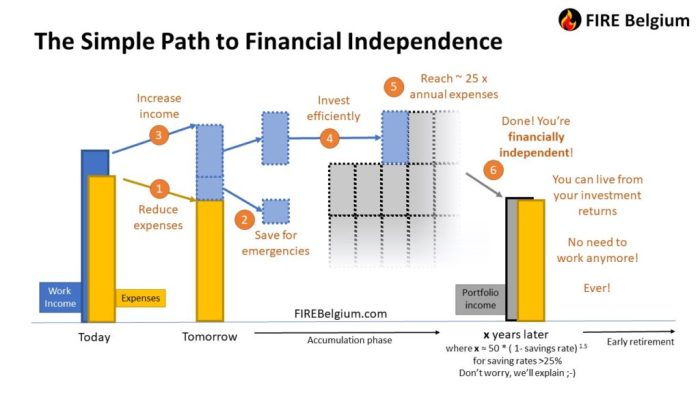
Investing is a crucial component of achieving financial independence. It allows your money to grow over time, potentially outpacing inflation and providing a substantial nest egg for your future. Understanding different investment options and their associated risks is essential to building a portfolio that aligns with your financial goals and risk tolerance.
Investment Options and Risk Tolerance
The suitability of an investment option depends heavily on your risk tolerance and time horizon. Higher-risk investments generally offer the potential for higher returns but also carry a greater chance of loss. Conversely, lower-risk investments typically offer more stability but lower potential returns. Your time horizon—how long you plan to invest your money—also plays a critical role.
Longer time horizons allow you to ride out market fluctuations, making higher-risk investments more palatable.
Stocks
Stocks represent ownership in a company. Their value fluctuates based on company performance and market conditions. Individual stocks carry higher risk than diversified stock investments, but the potential for significant returns is also higher. Investing in individual stocks requires research and understanding of the company’s financial health and industry trends.
Bonds
Bonds are essentially loans you make to a government or corporation. They offer a fixed interest rate and return your principal at maturity. Bonds are generally considered less risky than stocks, offering more stability but lower potential returns. Government bonds are typically considered the safest type of bond.
Real Estate
Real estate investments involve purchasing properties (residential, commercial, or land) with the expectation of appreciation in value or rental income. Real estate can be a relatively illiquid investment, meaning it can be difficult to quickly convert to cash. However, it can offer significant long-term growth potential and potential for passive income through rental properties.
Index Funds
Index funds are passively managed funds that track a specific market index, such as the S&P 500. They offer diversification by investing in a wide range of companies, reducing risk compared to investing in individual stocks. Index funds generally have low expense ratios, making them a cost-effective investment option.
Investment Strategies: Benefits and Risks
Different investment strategies involve varying levels of risk and potential returns. A conservative strategy might prioritize low-risk investments like bonds and government securities, offering stability but limited growth. A moderate strategy might include a mix of stocks and bonds, balancing risk and return. An aggressive strategy might focus on higher-risk investments like individual stocks or growth stocks, aiming for higher returns but accepting greater volatility.
Diversified Investment Portfolio Example for Beginners
A diversified portfolio is crucial for mitigating risk. The following example is suitable for a beginner investor with a long-term horizon aiming for financial independence. Remember, this is a sample portfolio and individual circumstances should guide investment decisions. Consult a financial advisor for personalized advice.
| Asset Class | Allocation Percentage | Risk Level | Expected Return (Illustrative) |
|---|---|---|---|
| Index Funds (S&P 500) | 50% | Moderate | 7-10% (Long-term average) |
| Bonds (Government & Corporate) | 30% | Low | 3-5% |
| Real Estate Investment Trust (REIT) | 10% | Moderate | 5-8% |
| High-Yield Savings Account | 10% | Low | 1-2% |
Debt Management Strategies
Effective debt management is crucial for achieving financial independence. High-interest debt can significantly hinder your progress towards your financial goals, consuming a large portion of your income and preventing you from saving and investing. Understanding and implementing sound debt management strategies is therefore a vital step in building a secure financial future.
Strategies for Paying Off High-Interest Debt
Several methods exist for tackling high-interest debt, each with its own advantages and disadvantages. The choice of strategy often depends on individual personality and financial circumstances. Two popular approaches are the debt snowball and debt avalanche methods.The debt snowball method focuses on paying off the smallest debts first, regardless of interest rate. This approach provides psychological momentum, as you quickly see progress and gain confidence.
Once the smallest debt is cleared, you roll the payment amount into the next smallest debt, creating a “snowball” effect. While less mathematically efficient, the psychological benefits can be significant for maintaining motivation.The debt avalanche method, conversely, prioritizes paying off the debts with the highest interest rates first. This method is mathematically more efficient, minimizing the total interest paid over time.
While it may take longer to see initial progress, it ultimately results in lower overall debt costs.
Negotiating Lower Interest Rates with Creditors
Negotiating lower interest rates can significantly reduce the total cost of your debt. Before initiating negotiations, gather all relevant documentation, including your credit report and statements showing your consistent payment history. Contact your creditors directly, explaining your situation and proposing a lower interest rate. Be polite, professional, and prepared to present a solid case for why you deserve a reduction.
Highlighting a history of on-time payments and your commitment to paying off your debt can strengthen your negotiation position. If unsuccessful with one creditor, try another. Many creditors are willing to negotiate to retain your business. For example, a credit card company might offer a lower rate to prevent you from transferring your balance to a competitor.
Avoiding Future Debt Accumulation
Preventing future debt accumulation is just as important as managing existing debt. Developing a realistic budget is a foundational step. Track your income and expenses meticulously to identify areas where you can cut back. Prioritize needs over wants, and avoid impulsive purchases. Before taking on any new debt, carefully evaluate the necessity and the long-term financial implications.
Consider the total cost, including interest, and ensure you can comfortably afford the monthly payments without compromising other financial goals. Building an emergency fund can also prevent you from resorting to high-interest debt during unexpected financial emergencies. A well-funded emergency fund provides a safety net to cover unforeseen expenses, eliminating the need to borrow money at high interest rates.
For example, having three to six months of living expenses saved can provide significant peace of mind and financial stability.
Retirement Planning
Planning for retirement is a crucial aspect of achieving financial independence. It involves carefully considering your current financial situation, your future goals, and the various tools available to help you reach your retirement objectives. A well-structured retirement plan accounts for factors like your age, desired lifestyle, and potential longevity, ensuring a comfortable and secure future.Retirement Savings VehiclesDifferent retirement savings vehicles offer various tax advantages and contribution limits.
Understanding these differences is key to choosing the best option for your individual circumstances.
Types of Retirement Accounts
Choosing the right retirement account depends on your income, tax bracket, and risk tolerance. Each option offers distinct advantages and disadvantages.
- 401(k) Plans: Employer-sponsored retirement plans that often include employer matching contributions. Contributions are typically pre-tax, reducing your taxable income in the present. However, withdrawals in retirement are taxed as ordinary income.
- Traditional IRAs: Individual Retirement Accounts that offer tax-deductible contributions, lowering your current taxable income. Similar to 401(k)s, withdrawals are taxed in retirement.
- Roth IRAs: Contributions are made after tax, meaning you don’t get an immediate tax deduction. However, withdrawals in retirement are tax-free, providing a significant advantage in later years. Income limits apply to Roth IRA contributions.
Factors Influencing Retirement Planning
Several key factors significantly impact the success of your retirement plan. Failing to consider these elements can lead to inadequate savings and a less comfortable retirement.
- Age: The younger you start saving, the more time your investments have to grow, benefiting from the power of compounding. Starting early allows for smaller contributions to accumulate substantial value over time.
- Expected Lifespan: A longer life expectancy requires a larger retirement nest egg to cover expenses. Factors like family history and overall health can inform estimations of lifespan.
- Desired Retirement Lifestyle: Your desired lifestyle in retirement significantly influences your savings needs. A luxurious retirement necessitates a substantially larger retirement fund compared to a modest one. For example, someone planning on extensive travel will require more savings than someone planning a quiet retirement at home.
- Inflation: The eroding effect of inflation on purchasing power needs to be considered. Your retirement savings must account for the increased cost of goods and services over time. For instance, if inflation averages 3% annually, $100,000 today may only have the purchasing power of approximately $74,409 in 10 years.
Sample Retirement Plan
This is a simplified example and should be tailored to individual circumstances. Professional financial advice is always recommended.
| Age | Annual Contribution | Investment Strategy | Withdrawal Strategy | Potential Adjustments |
|---|---|---|---|---|
| 35 | $10,000 | Diversified portfolio (stocks, bonds) | Phased withdrawals starting at age 65 | Increase contributions with salary increases, adjust investment allocation based on market conditions and risk tolerance. |
| 45 | $15,000 | Shift towards more conservative investments | Re-evaluate withdrawal strategy based on actual portfolio performance and lifespan projections. | Consider part-time work to supplement income if needed. |
| 55 | $20,000 | Maintain conservative investment approach | Adjust withdrawals based on inflation and unexpected expenses. | Consider long-term care insurance. |
| 65 | $0 | Begin withdrawals | Withdraw a fixed percentage annually, adjusting for inflation. | Monitor portfolio health and adjust withdrawals as needed. |
It is crucial to remember that this is a simplified example and individual circumstances may require significant modifications. Seeking professional financial advice is strongly recommended to create a personalized retirement plan.
Achieving financial independence requires dedication, planning, and consistent effort. By understanding your current financial situation, setting realistic goals, and implementing effective strategies for budgeting, investing, and debt management, you can pave the way towards a secure and fulfilling future. Remember, financial planning is an ongoing process; regular review and adjustments are crucial to ensure your plan remains aligned with your evolving needs and aspirations.
Embrace the journey, and enjoy the freedom that comes with financial independence.
Common Queries
What is the difference between a Roth IRA and a traditional IRA?
A Roth IRA offers tax-free withdrawals in retirement, while contributions are made after tax. A traditional IRA allows for tax-deductible contributions, but withdrawals are taxed in retirement.
How much should I save for retirement?
A general guideline is to aim for saving at least 15% of your pre-tax income, but the ideal amount depends on factors like your age, desired retirement lifestyle, and expected lifespan.
When should I start investing?
The sooner you start investing, the better, as compounding returns can significantly increase your wealth over time. Even small, consistent investments can make a big difference.
How can I reduce my risk when investing?
Diversification is key to reducing investment risk. Spread your investments across different asset classes, such as stocks, bonds, and real estate.